







Avoid yukata disasters: 10 common problems and how to fix them on the spot
Click here for Kyoto Kimono Rental Plans & Price List
① Troubleshooting Kimono Issues (Kimono Section)
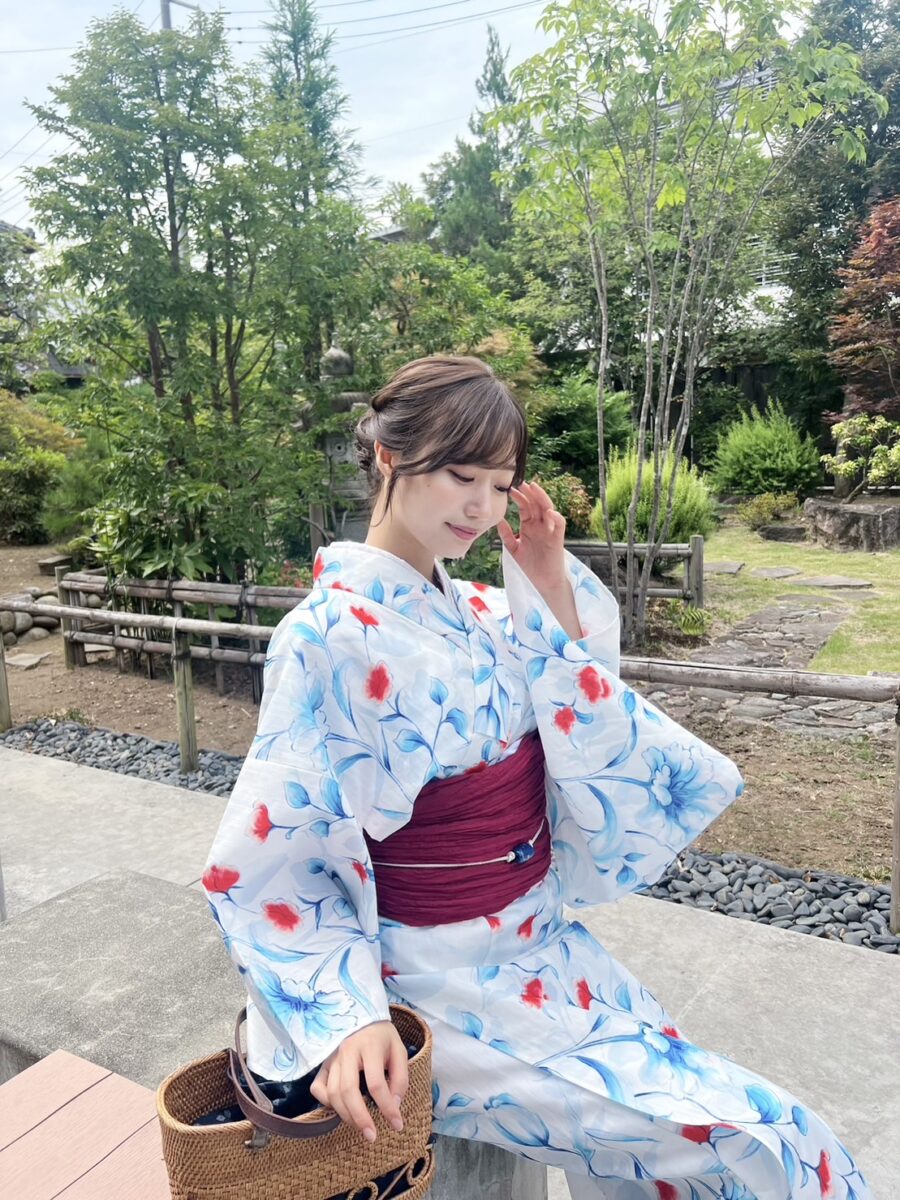
When the Hem Sags
First, flip up the ohashori (the part folded above the obi at the waist), and pull up the lower front part (shita-mae) and tuck it into the waistband (koshi-himo).
Next, pull up the upper front part (ue-mae) in the same way, and finally, adjust the ohashori.
If you find it difficult to do this, you can also use small safety pins to secure the lifted parts. Pinning them near the obi will make them less noticeable.
When the Collar Is Messy
First, pull the ohashori from the back.
Insert your left hand into the left side opening (mi-hachiguchi), and pull the collar of the lower front part (shita-mae).
Adjust the collar of the upper front part (ue-mae) by pulling the ohashori. Finally, tidy up the chest area.
② Troubleshooting Kimono Issues (Obi Section)
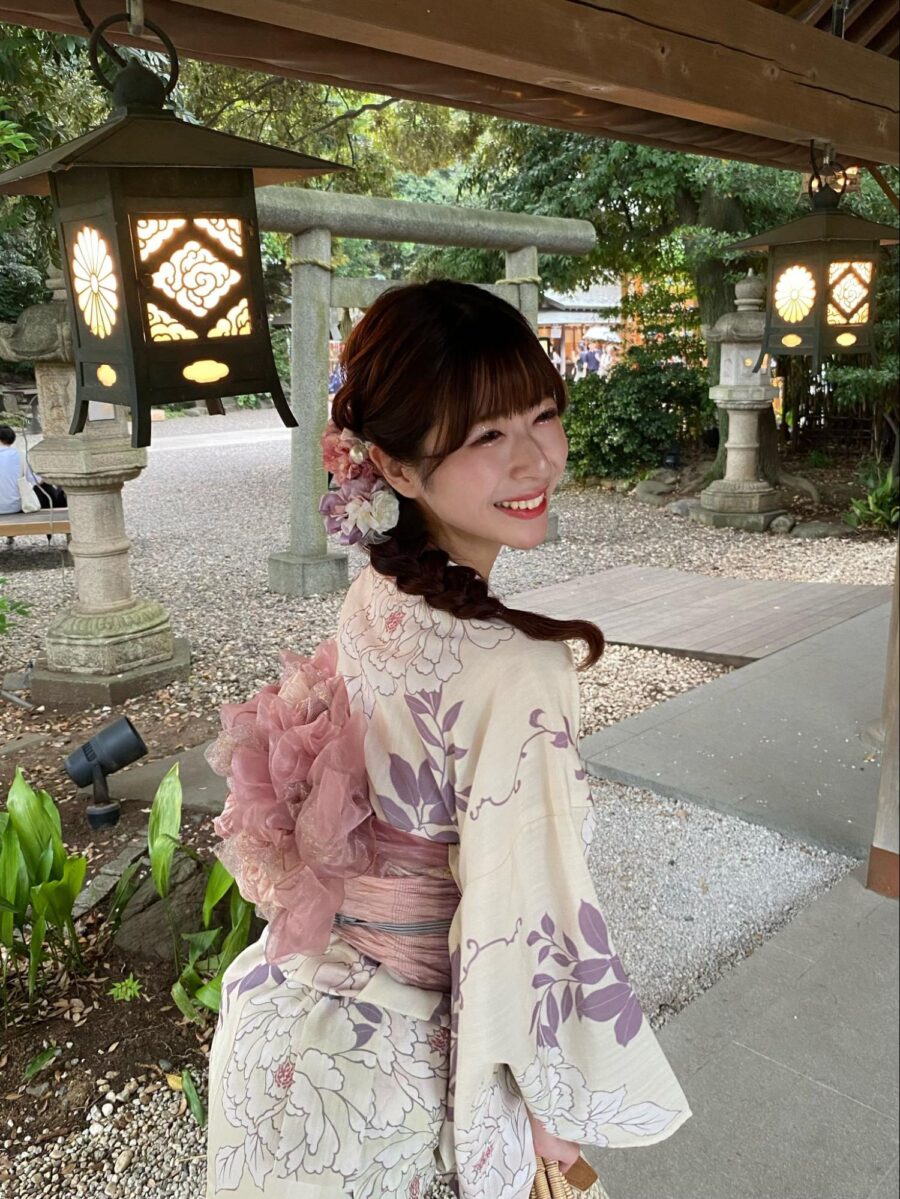
When the obi feels too tight
Slip both index fingers inside the inner edge of the obi and gently move them outward to the left and right, as if slightly pulling it apart.
This will help loosen the obi, but be careful not to pull too hard.
If you tug too strongly, the obi may become overly loose. Check how it feels as you go, and adjust it gradually and gently.
When the obi starts to loosen
There can be various yukata troubles, but a loosening obi might be the most nerve-wracking one.
In such cases, a handkerchief or a small towel can be very helpful.
Fold the handkerchief and tuck it between the yukata and the obi at the back to fill the gap.
Since appearance is important, make sure the handkerchief or towel does not stick out and remains hidden neatly.
③ Thong Strap Chafing (Hanao Blisters)
Hanao blisters occur when the thong strap of the geta rubs against your skin, causing irritation, peeling, or even blisters.
It would be disappointing if your feet started hurting so badly that you could barely walk after renting a yukata.
To prepare for this, it’s a good idea to bring adhesive bandages with you.
If you are especially worried about chafing, you can apply bandages in advance to the areas where the strap touches your skin.
If you are concerned about bandages being visible during the day, you might consider putting them on around sunset instead.
If you absolutely do not want your bandages to show, cute tabi socks are also a great option. They can help prevent chafing and keep your feet warm as well.
You can also gently widen the thong strap of the geta and massage the front section (maetsubo—the part that sits between your big toe and second toe) to soften it as much as possible beforehand.
Hanao blisters can be extremely painful. Be sure to take proper preventive measures in advance.
④ Staying Cool
First, choose breathable underwear.
Although yukata are made of relatively light fabric, you will still sweat, so it is important to wear proper undergarments.
Carrying a uchiwa (flat fan) or sensu (folding fan) not only helps you stay cool but also enhances the festive atmosphere.
While shops sometimes hand out promotional fans with their store names printed on them, it is recommended to coordinate your fan with your yukata for a more stylish look.
When using a fan, avoid fanning yourself vigorously. Instead, gently fan upward from around the lower part of your face.
A softer motion feels cooler and makes your yukata appearance look more graceful and elegant.
⑤ Keeping Warm
This may sound contrary to staying cool, but wearing a yukata can sometimes leave you feeling unexpectedly chilly.
You may feel fine outdoors, but air-conditioned cafés and indoor spaces can make you feel cold.
In such cases, a lightweight shawl is recommended.
Choosing one that matches the pattern of your yukata will create a more polished and fashionable look.
As mentioned in the section on thong strap chafing, wearing tabi socks is also a good option.
If you tend to get cold easily, arm covers can help—and they also provide UV protection.
Again, choose designs that blend well with your yukata.
However, be careful not to overdo your cold-weather measures and give the impression that you look too warm.
Select items that maintain the refreshing and airy feel of your yukata.
⑥ Hair Set Disruption
If you’re worried about your hairdo getting disheveled, there’s a simple solution. First, consider wearing a hat.
Wearing a hat can help you maintain your hairstyle throughout the day. You can choose a summer-appropriate hat like a straw hat or a beret for winter.
Another option is to use decorative hairpins or combs to secure your hair. These accessories not only keep your hair in place but also add an elegant touch to your yukata ensemble.
⑦ When Your Yukata Gets Stained
Accidents happen, and sometimes you might spill food or drink on your yukata. Don’t worry; there’s a quick solution for this.
If your yukata gets stained, use a damp cloth or a stain remover pen (available at many convenience stores) to gently treat the affected area. Be careful not to rub too vigorously to avoid damaging the fabric.
It’s a good idea to bring a small travel-sized stain remover or wet wipes with you when you go out in your yukata, just in case.
⑧ When Your Undergarments Show Through
If you’re concerned about your undergarments showing through your yukata, here are some tips to prevent it:
First, choose undergarments that match your skin tone and are not too contrasting with your yukata’s color. Beige or nude-colored undergarments are usually a safe choice.
Second, consider wearing a slip or an undergarment with a smooth texture to minimize lines and prevent them from showing through the fabric.
⑨ When You Need to Use the Restroom in a Yukata
Using the restroom while wearing a yukata can be a bit challenging, but it’s manageable with practice. Here are some steps to follow:
- First, find a private and clean restroom where you can comfortably change your clothes.
- Undo the obi and untie the yukata’s front strings (the koshi-himo).
- Gently slide the yukata down to your waist while keeping the top part wrapped around your body.
- Once you’ve finished in the restroom, reverse the steps to put your yukata back on properly.
It’s a good idea to practice this at home before going out in your yukata to avoid any mishaps.
Click here for Kyoto Kimono Rental Plans & Price List
⑩ Troubleshooting for Men
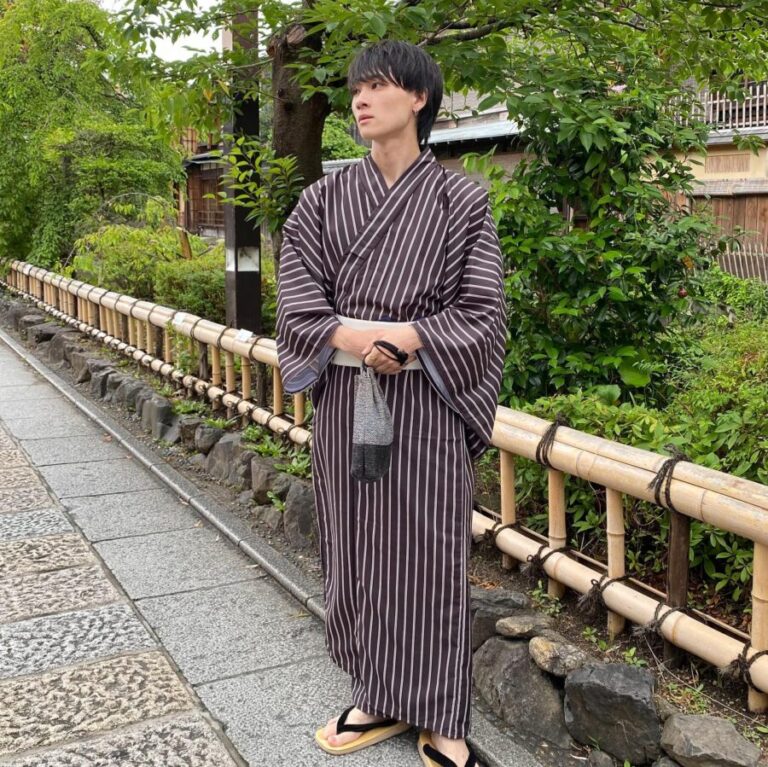
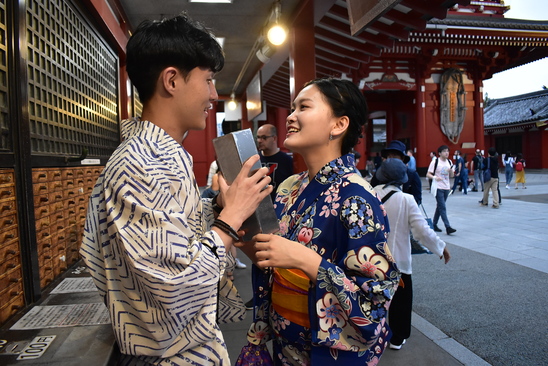
Both men and women can encounter yukata dressing issues. Here are some troubleshooting tips specifically for men:
When the Obi Slips Down
Similar to women, men can use a handkerchief or small towel to address this issue. The difference is in where you tuck the handkerchief.
For men, tuck it between your body and the yukata. Additionally, if you have a slender build, making adjustments with a towel or similar during the dressing process can help prevent slipping.
When the Collar Looks Sloppy and Wide
First, check if the obi is in the correct position. If the obi is properly placed, pull the lower and upper front of the yukata downwards, respectively.
This will make the collar look neat, but be careful not to pull too hard and ensure the obi doesn’t shift.
What to Wear Underneath Your Yukata?
Some might wonder what to wear underneath their yukata. While wearing a kimono slip is common, you can actually wear a tank top or even a T-shirt.
For the collar, it’s recommended to choose a deeper V-neck rather than a round one to prevent it from protruding beyond the yukata’s collar.
As for the bottom, whether it’s boxer shorts or shorts, anything that doesn’t affect the yukata is okay.
If you go with just a yukata due to the heat, it can cause the yukata to absorb sweat and stick to your skin, so be sure to wear something underneath.
So, how was it? We’ve listed various yukata rental troubleshooting tips, but did it help alleviate your concerns about potential issues? While there are many remedies, the best way to prevent troubles is to exhibit graceful movements that match the elegance of the yukata.
Embrace the spirit of a traditional Japanese beauty and a gallant Japanese man while enjoying your summer with yukata rental!